top of page
Bundle & Save! Course Collection Package

Subscribe & Stay in the Loop

Free download
The Power of Photography in Esthetic Dentistry
Print out this 12-clinical-photo series and establish clear parameters with your team. This ensures that anyone taking the photos follows the same standardized approach.
Clinical Tips


The Problem You’re Not Seeing: Transverse Asymmetry and the Three-Dimensional Smile
The thing about transverse asymmetry is that it hides. You can spend ten minutes looking at a smile — evaluating shade, incisal edge position, tooth proportion — and completely miss the fact that one side of the maxillary arch is sitting too far lingually. The teeth are behind the lips. The buccal corridor fills in on one side and disappears on the other. And until you pull the right records and superimpose them, the problem stays invisible.


Where Do You Begin? A Systematic Approach to Smile Design in Complex Esthetic Cases
When everything feels out of balance—gingival heights, tissue architecture, tooth length, midlines, and restorations completed over decades—it’s easy to feel overwhelmed before a case even begins. Complex esthetic cases aren’t just about what needs to be fixed; they’re about deciding where to start and what parameters should guide every decision that follows.


Implant Restoration Alongside a Veneer: Planning the “Magic Four”
Few cosmetic cases highlight the value of clinical judgment and patient communication like a well‑executed Magic Four. In this case, we walk through a common scenario with uncommon nuance: a patient who presents wanting to replace a single implant crown—and leaves with a dramatically improved smile built on thoughtful diagnosis, precise execution, and trust.


Managing Agenesis: From Orthodontics to Restorative Care
Managing agenesis is never a single‑phase problem—it’s a long arc that begins in mixed dentition and extends into early adulthood. For many young patients, the gaps go unnoticed until the teen years, when confidence, esthetics, and function all start to matter in new ways. This case follows Carson, a patient I first met in middle school, as she navigated years of orthodontics, transitional bonding, bone limitations, and restorative planning on her way to a complete smile.


Single-Tooth Case Breakdown: Where Emergence Meets Esthetics
At first glance, restoring just one central incisor seems simple. In reality, these cases test your precision more than full-arch or multi-unit plans, because every nuance—cervical scallop, emergence, value, translucency—must blend seamlessly with the natural contralateral.


The Art of Camouflaging Cant
This complex maxillary cant case shows how to achieve a natural, balanced smile even with skeletal asymmetry. Learn how digital photography, 3D scans, temporaries and detailed lab communication work together to guide every step—from planning and temporaries to final ceramics.


Unmasking Tooth Transformations Beneath Existing Restorations
Cases involving existing crowns and veneers can be deceptively complex. What you see on the surface often doesn’t tell the full story, and the real challenge begins once those restorations are removed.


Achieving Balance in a Smile with a Canted Maxilla
Cases involving a canted maxilla are always a challenge. The key is achieving symmetry without over-treating, because even subtle imbalances are noticeable. In this case, a patient came to me seeking improvement for her asymmetric smile caused by a canted maxilla. The first step was evaluating her face and smile as a whole


Finding the Comfortable Bite: A Complex Ortho-Restorative Case
Not every ortho-restorative case is straightforward. Often, orthodontics is used simply to align teeth for a more aesthetic restorative outcome. But sometimes, function—not aesthetics—drives the plan.


Why Mild Aligner Therapy Makes Anterior Composites More Predictable
In this tip, I walk through a real anterior composite case and show how a mock-up combined with mild aligner therapy can completely change your approach. You’ll see how small improvements in tooth alignment simplify composite placement, reduce bulk, control reflections, and make restorations predictable and repeatable.


Designing Minimally Invasive Veneers: Why Orthodontic Setup, Smile Design and Tiny Details Matter
What looked like a straightforward veneer case revealed deeper challenges—axial inclinations that didn’t match, gingival levels that lacked balance, and a collapsed upper arch that limited my ability to stay truly additive.
Guide to Minimally Invasive Smile Transformations
A Predictable Procedure Guide:
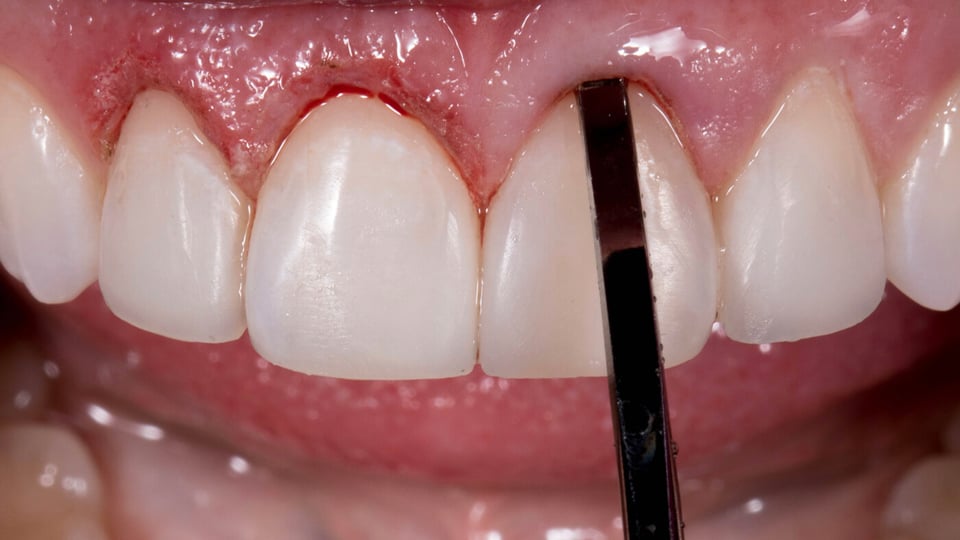
This tip will guide you through the process of performing crown lengthening on the same day as applying composite veneers, ensuring predictability in your procedure.


Mastering Esthetics in Challenging Implant Cases
When restorative space is tight, creativity and collaboration take center stage. Custom abutments can be prepped to rebuild ideal contours. Impression techniques must be executed with precision to preserve tissue form


Leveraging Digital Workflows
Using digital tools for facial analysis, we carefully evaluated the cant and asymmetries, planning a treatment approach that balanced her smile with her natural facial features. Invisalign helped us create the necessary space for restorations while addressing mild crowding.


Making the Most of Canine Substitution Cases
One of the most challenging restorative scenarios arises when patients complete orthodontic treatment—often without any prior smile design planning...


Preparation in Seating Dental Restorations
Preparing for a case with significant bone and tissue defects, I emphasize key steps: using an implant seating index for precise abutment...
Published Articles


Management of severe tooth wear with a predominantly additive, adhesive approach
Advanced tooth wear is a multifactorial condition that may arise from mechanical processes (attrition and abrasion), chemical processes (erosion), or — most commonly — a combination of both. Before planning definitive care, it is essential to identify the dominant etiologies, assess their current activity, and determine whether they can be controlled.


What is the best technique for fabricating provisional veneer restorations?
It is important to understand the variables involved in fabricating esthetic provisional restorations, and some of the most important factors to consider are the amount of tooth preparation involved and the degree of mechanical retention and resistance form present.


Using a Combination Approach for Predictable Cementation & Bonding
Today a variety of cements and adhesive materials are available, making selection and use of cementation and adhesive materials a potentially confusing or challenging process. Using a cohesive luting system appropriate for all types of restorations..


Composites, Matrix Systems and Curing Lights
Together, composites, matrix systems and curing lights allow clinicians to give patients the durable, high-quality restorations they need, but there are multiple variables that can affect the longevity of the restoration.


Replacing Worn Composite Restorations with Porcelain
Conservative approach maintains tooth structure while improving dentofacial esthetics.


A System for Reliable Composite Shade Matching: Custom Shade Tabs and an Intra-oral Mockup
Achieving natural-looking restorations requires precise composite-tooth shade matching, especially in the anterior esthetic zone. This article presents a systematic approach to color matching, including a basic overview of color science to guide clinicians. Through objective analysis of composites from different manufacturers and varying application thicknesses, the study demonstrates


Exploring Precision and Efficiency in Restorative Dentistry: Injection Molding
Dr. Amanda Seay and Dr. Adamo Notarantonio recently explored a modern approach that’s transforming restorative and esthetic dentistry. Injection molding—a technique adapted from industrial processes—is gaining attention for its ability to deliver predictable, efficient, and highly esthetic restorations.


Utilizing Digital Technology to Facilitate Dentofacial Integration
Advancements in digital technology offer a growing array of tools for enhancing team communication in restorative dentistry, utilizing high-quality photographs, presentation software, and video capture to analyze esthetic relationships. This article showcases the effective utilization of these digital tools to improve communication between dentists and laboratories in challenging esthetic cases, particularly highlighting the precision and ease of video capture in conveying li


Transitional Bonding with Kois Deprogrammer: A Conservative Treatment Approach
Restoring a worn dentition presents challenges for the restorative dentist, requiring decisions on reconstructing lost tooth structure, addressing underlying risk factors, and meeting treatment goals while adhering to the principles of minimal dentistry. A systematic approach, considering periodontal, biomechanical, functional, and dentofacial risks, is essential before proposing treatment. In this case, esthetic concerns were successfully addressed using minimal to no-prepar


Conservative Treatment to Improve Function & Esthetics
Patients turn to us for professional advice regarding treatment that aligns with their best interests. As dental professionals, our role is to of-fer patients solutions that meet their esthetic goals while ensuring that the treatment provided does not pose additional risks. Challenges can arise when patients are...


Achieving Esthetic and Functional Objectives with Additive Equilibration
In a case involving a patient with high esthetic demands who wanted to keep treatment conservative, minimal direct bonding was used to enhance anterior esthetics while creating acceptable function. Primary treatment goals in the case, in which the patient was diagnosed with a constricted chewing pattern, were to improve esthetics by lengthening the maxillary anterior teeth and to stop continued loss of anterior tooth structure.


Match Even The Whitest Teeth
At my general dentistry practice in Mount Pleasant, South Carolina, we see many patients during the course of a day. I have a team of dentists, and together, we offer a variety of services to our clientele. As clinicians, we all have our own techniques and preferences for how we like to do things as well as different materials that we prefer to use for various clinical situations. A big part of what I offer as a service is composite artistry, so it is important for me to have


When Words Are Not Enough
To consistently achieve excellent functional, esthetic, and biologic outcomes, the design of dental restorations should occur very early during treatment planning. When more data is shared between the clinician and the laboratory, a case can proceed more smoothly as it moves through preparation and provisionalization to the final restorations. Historically, laboratory technicians have selected the tooth shapes and arrangement based on guidelines provided by dentists through wr


Ivoclar Vivadent’s bluephase® style Offers Clinicians Convenience, Comfort
Ivoclar Vivadent’s bluephase® line of curing lights represents a balanced combination of proven dentistry standards and new technology. Featuring a specially developed polywave® light-emitting diode (LED), bluephase curing lights achieve an optimal broadband range from 385 nm to 515 nm—similar to the spectrum of halogen lights, which serve as the benchmark for many clinicians.


When Pictures Really Matter
When we say that “a picture is worth a thousand words,” we mean that a visual presentation conveys information more effectively than words can alone. Many people are more responsive to visual cues, which can elicit a myriad of feelings, such as joy, sadness, and curiosity. There are many important clinical reasons to utilize digital photography in our dental practices, but it is the emotional impact of those photographs that guides the decision-making process for the people w


Can Indirect Restorations Be Produced With the Same Level of Quality Without Using Digital Technology?
Whether or not digital tools are used in treatment, the critical foundations of quality clinical practice remain the same. Dentists must have the experience and wisdom to determine the correct diagnosis and appropriate clinical endpoint.
bottom of page